Scarborough 1914-18

Scarborough through the First World War remembered

  • Home
  • About
  • Partners
    • Friends of Dean Road and Manor Road Cemetery
    • Scarborough Maritime Heritage Centre
    • Scalby War Memorial
    • 1914 in Yorkshire
  • Events
    • Add your event
    • Categories
    • Locations
    • Adding events – guidance
  • Events Calendar
  • Contact us
  • Home
  • The Fallen
    • A
    • B
    • C
    • D
    • E
    • F
    • G
    • H
    • I
    • J
    • K
    • L
    • M
    • N
    • O
    • P
    • Q
    • R
    • S
    • T
    • U
    • V
    • W
    • X
    • Y
  • Diaries
  • Letters
  • Memorabilia
  • Memorials
  • Photos
  • Served and returned
    • A
    • B
    • C
    • D
    • E
    • F
    • G
    • H
    • I
    • J
    • K
    • L
    • M
    • N
    • O
    • P
    • Q
    • R
    • W
    • S
    • T
    • U
    • V
    • X
    • Y
    • Z
You are here: Home / Archives for Gladstone School

Gray, Ernest

29 March 2017 by Boro1418 Leave a Comment

Rank: Lance Corporal

Service No: 203484

Date of Death: 02/05/1917

Regiment/Service: York and Lancaster Regiment 1st/4th Bn

Awards: MM (Military Medal)

Grave Reference: III. B. 12. Cemetery: Pont-du-Hem Military Cemetery, La Gorgue

CWGC reference


Paul Allen writes:

During 2 May 1917 Scarborough lost: 203484 Lance Corporal Ernest Gray MM.

Born in Scarborough during 1899 at 101 Commercial Street, Ernest was the eldest son of ‘Foreman Butcher’ Robert Barker and Annie Elizabeth (formerly Wharton) Gray. Fatherless from the age of 7, Ernest lived for most of his short life with his mother and 3 younger siblings Hilda, Olive, and Robert (born at Scarborough 1901, 1903, and 1906 respectively) at 3 St Johns Road. He was educated at the nearby All Saint’s Church Infant, and Gladstone Road Council Schools. Leaving school like most children of the time at the age of 13, Ernest become an apprentice to joiner Mr Spink, whose workshop was located in Belle Vue Street.

Ernest enlisted into the locally-based Territorial Force 2nd/5th Battalion of the Yorkshire Regiment for 4 years service in the United Kingdom in Scarborough at North Street Barracks (this building would eventually become the YMCA until its demolition during the 1980s; the site is now (2011) occupied by a TKMaxx store), on 10 November 1914. Aged 17 years, two months at the time, according to his service record (courtesy of Ancestry.com), Ernest is also recorded as being 5 feet 6½ inches in height, with ‘normal’ vision and ‘good’ physical development. Issued with the Regimental Number 2689, a uniform, 2 pairs of boots and all the other accoutrements of an infantry soldier, Gray had set off on his journey to the war.

Formed in Scarborough during September 1914 for Home Service only, to replace the Western Front bound 1st/5th Battalion of the Yorkshire Regiment the 2nd/5th Battalion of the Yorkshire Regiment initially had its headquarters in the town’s Grand Hotel. However, by the time that Ernest joined the unit it was stationed at Darlington, where Private Gray joined soon after his enlistment. Remaining in training at Darlington until April 1915, Private Gray and the remainder of the Battalion moved to Benton Camp, near Newcastle, and stayed in this location until the start of April 1916, when all those men regarded as ‘A1’ were ‘asked’ to volunteer for foreign service. Duly, during the night of 6 July 1916, he went the way of so many thousands of ‘Tommies’ before him by boarding His Majesty’s Transport ‘Golden Eagle’. Arriving at Boulogne the following day, Ernest was sent to one of the many Infantry Base Depots [IBDs] located near the town of Etaples.

Assigned to the 37th (Territorial Force) IBD Gray underwent intensive infantry training at this Depot in large training areas located in the  expanse of sand dunes located near ‘Eat Apples’ known to the men as ‘the Bull Ring’, where he endured seemingly endless hours of exhaustive drill and exercises overseen by bellowing and often sadistic instructors known to the men as ‘Yellow Canaries’ (due to the yellow armbands they wore). Private Gray endured the rigours of the Bull Ring until Monday, 17 July 1916. Posted to 1st/4th York and Lancaster instead of the Yorkshire Regiment, Gray exchanged his Yorkshire Regiment ‘Eiffel Tower’ cap badge for that of the ‘Cat and Cabbage’ of the York and Lancs and duly joined his battalion on 18 July whilst it was ‘resting’ at Forceville.

Attached to 148 Brigade of the Territorial Force 49th (West Riding) Division, the 1st/4th (Hallamshire) Battalion of the York and Lancashire Regiment was a pre-war Territorial Force battalion of infantry. Located at Sheffield at the outbreak of hostilities the Battalion went to France during April 1915 and took part in the battle which included the first German phosgene gas attack during December that year whilst stationed on in the Yser Canal Sector to the north of Ypres. Involved in some of the heaviest fighting of the opening stages of the Somme of 1916, including the Battle of Albert (1-13 July), by the time that Ernest Gray joined the 1/4 York and Lancs the unit had recently been involved in the ferocious fighting on the Ancre, where on 16 July the unit was involved in an attack on Ovillers where it helped to fight off a German counter-attack on the ‘Leipzig Salient’ that had been spearheaded by bombing and flamethrowers.

Throughout the remainder of August Gray and his battalion were stationed in various sectors of the Somme: Martinsart Wood (4 August); Hedauville (7 August); Puchvillers (18 August); Hedauville (25 August); Aveluy Wood (26 August); and back to Martinsart Wood on 2 September. The following day the Battalion moved into the front line of the formidable Thiepval Sector. Ernest took part in operations on the Somme throughout the remainder of the month when, between 15-22 September, he took part in the Battle of Flers/Courcelette. It was during this action that the 18-year-old and a number of comrades were buried alive in a dugout that was hit by an enemy shell. The first to dig himself out, the dazed youngster, nonetheless, played a part in the rescue of the other trapped men. Displaying ‘conspicuous gallantry’ during this episode in his life Ernest was awarded the Military Medal (the award was ‘Gazetted’ in ‘The London Gazette’ of 14 November 1916).

Promoted to Acting (unpaid) Lance Corporal shortly after the Battle of Flers/ Courcelette (28 September 1916), Ernest Gray remained on the Somme throughout the bitter winter of 1916. However, by April 1917 his unit had moved further northwards to the French/Belgian border where, on 2 May 1917, Ernest killed by enemy shellfire, whilst resting in a house in the village of Pont-du-Hem that had come under fire from enemy artillery. Reportedly writing a letter to his mother at the time of his death, this part-written letter eventually reached Scarborough where his family found that the letter also contained a preserved Flanders poppy. His mother displayed the poppy on her mantelpiece for many years after Ernest’s death. [1]

Aged 18 at the time of his demise, the young soldier’s remains were taken to a small a battlefield cemetery located in an area that had once been an apple orchard near Pont-du Hem, a hamlet located on the main road between La Bassée and Estaires, where they were interred in Section 3, Row B, Grave 12.

Ernest’s name was included in a casualty list that appeared in ‘The Scarborough Mercury’ of Friday, 11 May 1917. Included in the small segment of news dedicated to the youngster’s loss was part of a letter from his Commanding Officer that had been sent to Ernest’s mother stating… ‘He will be sadly missed out here as he has always been a good soldier’…

Commemorated on Scarborough’s Oliver’s Mount War Memorial, Ernest Gray was a former member of the congregation of All Saints Church in Falsgrave and his name was also duly added to the church ‘Roll of Honour’ that contained the names of 41 men of the church who had lost their lives during the war of 1914-1918. Unveiled during the evening of Wednesday, 27 July 1921 by Lt Col A D  Legard CBE, Officer Commanding the local 1/5 Battalion of the Green Howards (Yorkshire Regiment) this fine memorial took the form of an oak screen and cost the church over £150. It remained in the church until its demise in the 1970s. However, the author does not know the current whereabouts of this memorial.

Ernest’s name can also be found, to this day on a large brass plate ‘Roll of Honour’ located in the Junior Hall of Gladstone Road School. Unveiled on 14 December 1921 by Ernest’s former Headmaster, Mr William Robert Drummond, this memorial contains the names of the 71 other former pupils of the school (including sisters Esther W and Maria M McLaughlin who died at Scarborough during 1918 of ‘Spanish Flu’ whilst acting as nurses with the Voluntary Aid Detachment aged 25 and 21 years respectively) who lost their lives whilst on active service in the Great War of 1914-1918.

[1] I am indebted to my very good friend Mr Bill Parker for his assistance in the gathering of information relating to his great uncle Ernest Gray. I am especially grateful that he had told me the story of the letter with the preserved poppy enclosed which provided a moving and emotive end to the story of a very brave young soldier of Scarborough, God bless him.

Paul Allen
Filed Under: G Tagged With: All Saints' Church, Falsgrave, Gladstone School, Military Medal, Oliver's Mount Memorial, Somme 1916, West Yorkshire Regt, York and Lancashire Regiment

Lawrence, Henry

8 March 2014 by Boro1418 Leave a Comment

Name: Henry Lawrence

Rank: Second Lieutenant

Date of Death: 17/01/1917

Age: 26

Regiment/Service:Yorkshire Regiment 5th Bn. attd. 6th Bn.

Commemorated: Pier and Face 3 A and 3 D. Memorial: Thiepval Memorial

Additional Information: son of the late James and Adeline Lawrence, of 71 Manor Rd, Scarborough.

CWGC reference

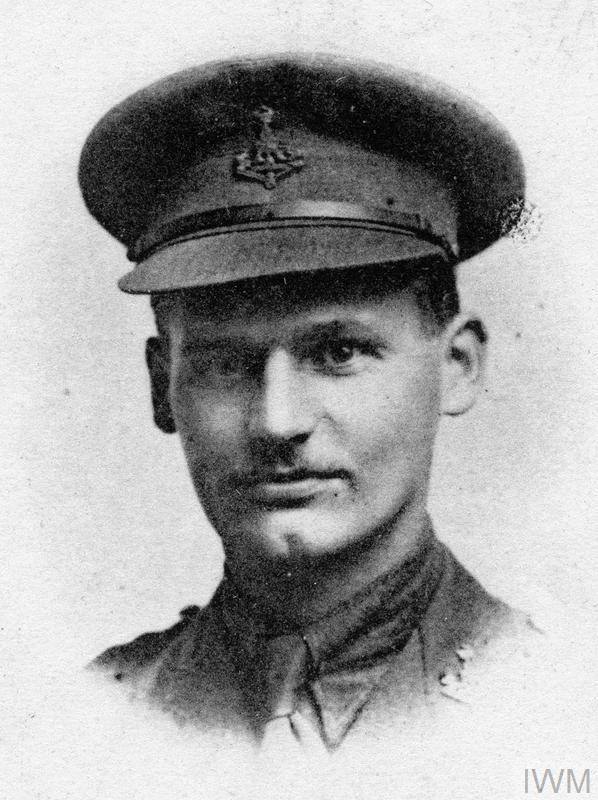
Image: © IWM (HU 123929)

Further information by Paul Allen:

Following their heroic attack and subsequent defence on the ‘Stuff Redoubt’ and ‘Hessian Trench’ at Thiepval Ridge the shattered remnants of 6th Battalion, the Yorkshire Regiment (on 29 September 1916 the battalion had suffered nearly 400 casualties) were relieved during the night of 30 September by troops from the 25th Division. Shortly afterwards the battle-weary unit had made their way to the rear, to a rest camp at Bouzincourt a village 2 miles to the east of Albert, where the valiant band of survivors (including Captain Archie White who would eventually receive the Victoria Cross for his actions at Hessian Trench) had been afforded some rest.

The battalion eventually moved to the village of Beaumetz where it had received ‘drips and drabs’ of reinforcements throughout October 1916, and by the end of the month the unit had received 19 officers and 427 ‘other ranks’ from the BEF’s base camp at Etaples. Amongst the officers who had joined the battalion had been a 26-year-old who had been seconded to the 6th from the Yorkshire Regiment’s 5th (Territorial) battalion: Second Lieutenant Henry Lawrence.

Born in Scarborough at ‘Somerset Cottage’, No 6 Somerset Terrace, on 22nd November 1890 (baptised at St Mary’s Parish Church on 17 December) Henry was the youngest son of Adeline (formally Turner) and nurseryman James Sidney Lawrence, a widower by 1917 who was the proprietor of ‘Crescent Nurseries’ in Manor Road, and a florists shop in Valley Bridge Parade. [1]

Motherless from the age of 5, Henry was a pupil of Gladstone Road Board School at the time his mother died at the age of 43 on Wednesday, 1 May 1895. At the age of 13 Henry, popularly known as Harry, had been fortunate enough to secure a place at the town’s Municipal School (the equivalent of today’s comprehensive school) that was situated in Westwood. Arriving there in 1903, Harry remained at the ‘Muni’ until 1907 when he left the school to travel to Canada to study at Toronto’s Wycliffe College with a view to being ordained and becoming a missionary. During the summer of 1913 Lawrence travelled to the wilds of the Western Canadian Province of Saskatchewan to assist with missionary work amongst the 300 inhabitants of the small, and curiously-named, town of ‘Eyebrow’ He remained at the settlement until the outbreak of war.

During September 1914 Harry Lawrence enlisted at Montreal as a private into the Universities Company of the Princess Patricia’s Canadian Light Infantry. The brainchild of wealthy Montreal businessman Hamilton Gault, the Patricias, named after Princess Patricia of Connaught, the Governor General of Canada’s daughter, was an extraordinary battalion of infantry which recruited mostly from the thousands of ex-British Army and Navy personnel who had settled in Canada in the years before the war.

By the time the battalion had completed its formation only 1 in 10 of the 1,100 recruits was born in Canada. 65 per cent of the recruits were English, 15 per cent Scottish, and 10 per cent were Irishmen. In addition 1,049 of the Patricias had served in the British Army or Royal Navy, and almost half of those had seen war service; between them they wore the ribbons of 721 campaign and service medals. By the time the formation was ready to leave Canadian shores it consisted of 2 sections of ex-Guardsmen, 2 of ex-Riflemen, and 2 of ex-public school boys.

With the minimum of training, Harry Lawrence and the remainder of the Patricias [even in official documents the unit was always referred to as ‘The Patricias’] with their commanding officer, Lieutenant Colonel Herbert Buller DSO sailed from Quebec on 27 September 1914 to become the first of Britain’s Empire forces to land in the UK. The Battalion was eventually been sent to the Winchester area during November where it was considered good enough to be incorporated into 83 Brigade of the then forming 27th Division, a formation composed of 12 Regular Army infantry battalions recently arrived in Britain following service in India, Hong Kong, and China. The Division had crossed to France shortly before Christmas 1914 and was eventually sent to the waterlogged St Eloi sector of Flanders during February 1915, where they had existed in appalling trench conditions.

The Patricias subsequently took part in the Second Battle of Ypres (22 April – 24 May 1915) where they had faced repeated frenzied German attacks and suffered terrible losses during the most critical day of the Battle of Frezenberg Ridge on 8 May, when all that stood between the Germans and the capture of the town of Ypres had been a thin line of battle-weary troops drawn from their own 27 Division and the 28th Division (between 23 April and 8 May, 83 Brigade lost 128 officers and 4,379 men). The British line at Ypres was held together by the superhuman efforts of the defenders and shortly after the fighting at Frezenberg, the battle of Second Ypres fizzled out.

Harry Lawrence eventually served with the Patricia’s for 9 months. During that time he was promoted to corporal and he had experienced one or two close calls. On one occasion whilst in the trenches at St Eloi a shell had exploded nearby killing and wounding 5 soldiers who were standing nearby. Lawrence received but a few scratches from the shattered glass of a periscope lens.

Lawrence was promoted ‘in the field’ to Second Lieutenant during early 1916 and shortly afterwards asked for, and received, a transfer to the 5th Battalion, The Yorkshire Regiment, which contained many men from Scarborough, including Lawrence’s great friend, 37-year-old solicitor’s son, William Andrew Turnbull, who was serving as a Second Lieutenant with the battalion. The two officers served together until 17 July 1916 when Turnbull was killed in action in the Locre Sector of Flanders.

The 5th Battalion was eventually sent to the Somme Sector where they took part in the Battle of Flers/Courcelette (15-22 September 1916) and the capture of the village of Martinpuich on 16 September. Shortly after these engagements Harry took a short leave in Scarborough before returning to France during October where he eventually joined the 6th Battalion, The Yorkshire Regiment.

Lawrence joined the 6th Yorkshires on the Somme near to the village of Beaucourt where, during the night of Wednesday, 17 January 1917, the young officer went out into no mans land with 2 others on patrol. One of this party shortly arrived back in the British lines. Badly wounded, the officer reported that Lawrence and his companion had also been injured. Search parties were duly sent into no man’s land to look for the 2 officers but failed to find the injured men. However, a few days later the remains of Harry Lawrence and his companion were located in a water-filled shell hole where their remains had been buried. Although marked on a trench map, by the end of the war Lawrence’s burial site had been lost and his remains have never been recovered from the battlefield.

Harry’s name was eventually added to the Pier and Face 3A and 3D of the Thiepval Memorial to the Missing of the Somme. In Scarborough the missing lieutenant’s name was included on a now (2003) fallen down and broken gravestone in the town’s Dean Road Cemetery (Section A, Row 8, Grave 2), which also bears the names of his Norfolk-born mother Adeline, and Scarborough-born father James Sidney Lawrence, who later died at his home at 71 Manor Road on 22 October 1922 at the age of 78 years.

Henry Lawrence was also commemorated in his old school in Gladstone Road on the ‘Roll of Honour’ that bears the names of 71 ‘old boys’ and 2 women who had lost their lives during the war. The memorial can be found in the hall of the present day Junior School. He was also commemorated on the ‘Roll of Honour’ at the Municipal School, which carries the names of 63 former pupils. Their memorial is now (2003) located in Graham Comprehensive School, in Woodlands Drive. and bears the inscription:

‘To the honoured memory of the old boys who fell in the Great War’
‘Erected by the Old Scholars Club’…

Harry was also a member of the congregation of the now defunct Holy Trinity Church in Scarborough’s Trinity Road, thus Harry Lawrence’s name (and that of his dear friend William Andrew Turnbull) was included on the church ‘Roll of Honour’ which was situated on the south interior wall and window of the church. (At the time of writing, 2003, the church is in the process of being converted into a unit of flats, and the whereabouts of the ‘Roll of Honour’ is not known.) The Inscription on this Memorial had read:

‘To the glory of God and in undying memory of the men from this church and parish who gave their lives in the Great War 1914—1919. This window and tablet have been placed here by their friends and fellow parishioners’…

Henry Lawrence’s is also commemorated in Canada on page 578 of the First World War Book of Remembrance, which is located in a memorial chamber in The Peace Tower, on Ottawa’s Parliament Hill, which is maintained by Veteran Affairs Canada.

[1] At the time of the 1891 Census of the population of Scarborough, the Lawrence family resided at ‘Somerset Cottage’ and consisted of: James, aged 37, born at Scarborough; Adeline, aged 39, born Pulham, Norfolk; Arthur, aged 15, Ernest, aged 14, Frank, aged 11, and Agnes, aged 7, (all born at Doncaster); Flora, aged 3, and Henry, aged 4 months, both of whom had been born at Scarborough. Arthur Lawrence, a florist in the family business died at the age of 40 on 26 February 1916. Following a ‘heated argument’ with his father, Arthur had returned to his home at 138 Moorland Road where he committed suicide by hanging. His body was found by his wife, Minnie Theresa Lawrence. Arthur was subsequently buried in Scarborough’s Manor Road Cemetery (Section O. Row 2. Grave O.) with first wife Jessie Lawrence (Arthur had married Jessie Plows at St Mary’s on 6 May 1899 and she had died on 25 April 1910 at the age of 36). Minnie Theresa Lawrence died on 10 April 1933 at the age of 63. This lady’s grave is located on the border of Section W, Grave 75. Henry’s eldest brother Ernest Lawrence died in Scarborough at the age of 93 on 3 August 1970, and he was buried in Manor Road Cemetery with his wife Elizabeth (formerly Alden) who died on 10 January 1958, at the age of 80.

Paul Allen

Filed Under: L Tagged With: Dean Road Cemetery, Gladstone School, Municipal (Graham) School, Oliver's Mount Memorial, Yorkshire Regt

Bielby, Thomas C

27 February 2014 by Boro1418 Leave a Comment

Name: Thomas Crawford Bielby

Rank: Corporal

Service No: 241075

Date of Death: 18/01/1918

Age:26

Regiment/Service: Yorkshire Regiment “B” Coy. 13th Bn

Grave Reference:II. D. 12. Cemetery: Mory Abbey Military Cemetery, Mory

Additional Information:Son of John William and Maria Bielby, of Scarborough; husband of Elsie Cordiner Bielby, of 17 New St, Pateley Bridge, Harrogate.

CWGC reference


Paul Allen writes:

13 days after the death of Lance Corporal Barraclough, Scarborough also lost: 241075 Corporal Thomas Crawford Bielby.

A member of ‘B’ Company of the 13th (Service) Battalion of the Yorkshire Regiment, ‘Tommy’ Bielby was born in the town during 1892 at 16a Castlegate, and was the 26-year-old eldest of 6 children of Maria (formerly Crawford) and John William Bielby, a bricklayer by trade, who was living in Scarborough at 31 Norwood Street at the time of their son’s death.

A pupil of Gladstone Road Infant and Junior Schools between 1896 and 1904, at the age of 12 Bielby left ‘Glaggo’ Road to become an errand boy for local grocer Charles Edwards, operating from his shop in Seamer Road. Still employed by Mr Edwards at the time of the 1911 Census, Tommy resided with the rest of his family at 77 Norwood Street. The family consisted of ‘bricklayer’ John William (born 1869), Maria (b1870), John William ‘bricklayer’ (b1894), ‘waitress’ Sarah Jane (b1895), Rebecca, ‘cash desk’ (b1897), Ethel Maria (b1901), and Doris Irene (b1906); all had been born at Scarborough.

Tommy Bielby married his childhood sweetheart Elsie Cordiner Dutchman (the youngest daughter of May and John Henry Dutchman) at St Mary’s Parish Church on Wednesday, 24 March 1915, and 2 months later he enlisted into the Yorkshire Regiment at Scarborough’s Court House, located on the corner of St Thomas Street and Castle Road, (now a Borough Council car park).

As with Alan Barraclough, Tommy Bielby began his army career at the Yorkshire Regiment’s Regimental Depot at Richmond, where he endured the customary 3 months of basic infantry training before being posted to the Territorial Force 2nd/4th Battalion of the regiment, which at the time was part of 189 Brigade of 63rd Division. A pre-war ‘Saturday night’ soldier, Tommy’s previously-acquired military skills soon saw him being promoted to corporal, and he remained in various locations in England with the battalion as an instructor until the end of November 1917, when he was placed amongst a draft of replacements which joined the veteran 13th Battalion of the Yorkshire Regiment in France.

Attached to the 121 Brigade of 40th Division, by the time that Bielby joined the battalion’s ‘B’ Company, its remnants had been ‘resting’ near the village of Ervillers, having recently been withdrawn from the operations at Cambrai, where the unit had almost been totally wiped out in the ferocious fighting at Bourlon Wood (of the 24 officers and 450 other ranks who went into the wood on the morning of 23 November 1917, barely 100 all ranks came out 3 days later).

Bielby spent Christmas Day of 1917 in Divisional Reserve at Belfast Camp. 2 days later his battalion returned to the front line near to Ervillers where the men endured the first few days of the new year in conditions which are described by Wylly: ‘During January the weather was very inclement, alternate snow and sudden thaws rendering the communication trenches almost everywhere impassable, and reliefs had to be carried out over the top’. [1]

A soldier who survived barely 3 weeks of active service, Tommy Bielby was amongst the thousands upon thousands of men whose deaths did not warrant a mention in any of the history books. Officially recorded as having been killed in action during Friday, 18 January 1918, the news of Tommy’s demise reached Elsie Bielby [who, by 1918, was residing with their daughter, Elsie (aged 1), at 100 Moorland Road) on Tuesday, 22 January; the tidings were also included in a casualty list that appeared in the ‘Scarborough Mercury’ of Friday, 25 January:

‘Killed in action’

‘News has come from the commanding officer that Thomas Crawford Bielby, 100 Moorland Road, was killed on January 19th. He leaves a widow and one child. He was 26, joined up in May 1915, and had been a member of the Territorials. He went to France in December 1917, being Sergeant Instructor prior to going out. He was the son of Mr. Bielby, builder, Norwood Street, and was formerly in the employ of Mr. Edwards, Grocer, who has lost several members of his staff in the war … ‘

The remains of Corporal Bielby were taken some two kilometres to the east of Ervillers, where they were interred in a burial site known as ‘Mory Abbey Military Cemetery’, which was, and still is, located close to the village of Mory (the cemetery is to be found 450m north of the village on the north side of the road to Ecoust-St Mein, opposite a large farm known as L’Abbaye). Tommy’s final resting place is to be found in Section 2, Row D, Grave 12 of the cemetery.

Among the 73 former pupils of Gladstone Road Council School who lost their lives during the war of 1914-1918, Thomas Crawford Bielby’s name was commemorated on the school’s War Memorial, which was unveiled in the Junior Hall on 14 December 1927 by Gladstone Road’s first Headmaster, Mr William Robert Drummond. The memorial takes the form of a large brass plaque bearing the names of the lost pupils (including sisters E W and M M McLaughlin, who died whilst on active service whilst acting as nurses with the Volunteer Aid Detachment), and can still be found in its original place in the Junior Hall of the school.

Tommy’s name can also be found on a gravestone in Scarborough’s Dean Road Cemetery (Section B, Row 15, Grave 34), which also bears the name of his younger sister, Sarah Jane Bielby. More popularly known as ‘Cissie’, Sarah was married in Halifax during 1919 to Alfred J Arnold and passed away on 20 September 1924 at the age of 29 years. The memorial also commemorates Tommy’s mother, Maria Bielby, who passed away at the age of 71 years on 5 June 1942, and his father, John William Bielby, who died at his home at 41 Beechville Avenue on Friday, 30 September 1949 at the age of 81.

The memorial also contains the name of Tommy’s younger brother, John William Bielby, who also served and survived the Great War.

Shortly after Tommy’s death, on Friday, 1 February 1918, Elsie Bielby commemorated her lost husband in the ‘Births, Marriages, and Deaths’ column of that night’s edition of the ‘Scarborough Mercury’;

‘Thomas Crawford Bielby—dearly beloved husband of Elsie C. Bielby, 100 Moorland Road [eldest son of John W. Bielby, Norwood Street], killed in action, January 19th 1918, aged 26 years…

He died unnoticed in the muddy trench—Nay, God was with him, and he did not flinch’

[1] The Green Howards in the War 1914-1918; Colonel H.C. Wylly. (Scarborough Reference Library)

Paul Allen

Filed Under: B Tagged With: Dean Road Cemetery, Gladstone School, Oliver's Mount Memorial, St Mary's Parish Church, Yorkshire Regt

Search Scarborough 14-18

About this site

Scarborough 1914-18 is currently a work in progress as we build a range of content related to Scarborough, Whitby and Filey, and the surrounding areas on during the Great War of 1914-18.
We welcome your contributions in the form of commemorations of the fallen, information on those who served, stories, photographs, facsimiles of newspapers, photographs of your memorabilia and any other material related to the Great War. Please use the Contact us link above to get in touch.

Remember Scarborough Partnership

Logo here

News

Women in World War One talk at Scarborough Library 1 July 2014

Pop in for the pop up museum at Scarborough Library

Copyright © 2026 · News Pro Theme on Genesis Framework · WordPress · Log in